alphadieselsolutions.com
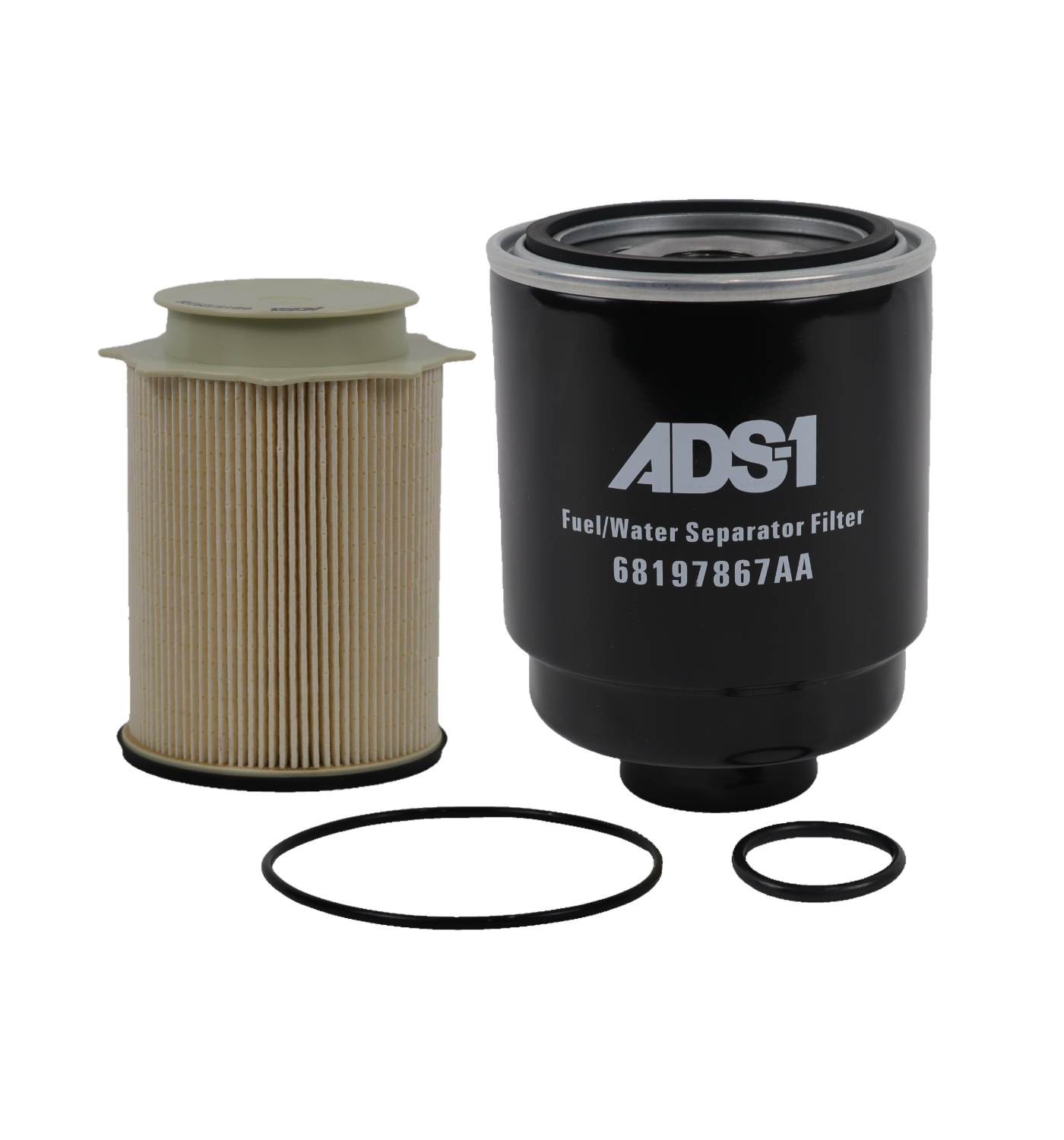
ADS-1 / AD7947 Dodge RAM 6.7L Cummins Fuel/Water Separator 2013-2018
ADS-1 / AD7947 Dodge RAM 6.7L Cummins Fuel/Water Separator 2013-2018
Couldn't load pickup availability
ADS-1 Diesel Fuel Filters
ADS-1 Fuel Filters AD7947 are engineered to deliver maximum protection for your fuel system by effectively capturing dirt, rust, water, and other harmful contaminants. Designed to maintain consistent fuel flow and pressure, these filters support optimal engine performance, improved acceleration, and enhanced fuel efficiency. With advanced filtration technology and premium construction, ADS-1 ensures reliable performance under the most demanding conditions.
Key Features
- High-Efficiency Media – Premium 3-layer pleated cellulose-glass media for superior contaminant capture and long service life.
- Exceptional Flow Capacity – Large filter pleats maximize surface area, ensuring consistent flow rates without restriction.
- Durable Construction – Built with high-strength carbon steel housings (where applicable) for maximum durability.
- Ready-to-Install – Includes O-rings where required for a precise fit and leak-free seal.
- OEM-Level Performance – Designed to meet or exceed OEM specifications for fit, form, and function.
Micron & Efficiency Ratings
- ADS-1 Ram 6.7L/3.0L Cummins Fuel/Water Separator (2013–2018): 4 Micron @ 96.92% Efficiency
ADS-1 Ram 6.7L Cummins Fuel Filter (2010–2024): 3 Micron @ 94.92% Efficiency
Vehicle Compatibility
- 2013–2018 Ram 6.7L Cummins: 2500, 3500, 4500, 5500
OEM Cross Reference
- Fuel/Water Separator (2013–2018): ADS-1 AD7927|Mopar 68197867AA | Wix WF10112 | Baldwin BF46031 | Premium Guard DF99085 | Purolator F51408
- Fuel Filter (2010–2024): ADS-1 AD7904|Mopar 68157291AA | Wix WF10255NP | Baldwin PF9870 | Premium Guard DF8606 | Purolator F36294
Recommended Service Interval
Follow the vehicle manufacturer’s service guidelines.
- Typical replacement: Every 5,000–10,000 miles, not to exceed 15,000 miles.
Share